Microbial Liquid Fertiliser — Upcycled from Australian Farm By-Products

OHG Bio is bringing an established microbial liquid fertiliser technology to Australian farms. Once established here, it will collect liquid effluent from Australian livestock farms and convert it into a microbial liquid fertiliser, returned to productive land. Less waste on your farm. Nutrients returned to your soil.
A circular system for Australian agriculture

Your Liquid Waste Problem Is Our Raw Material

Australian agriculture has two expensive problems that sit next to each other and never touch.

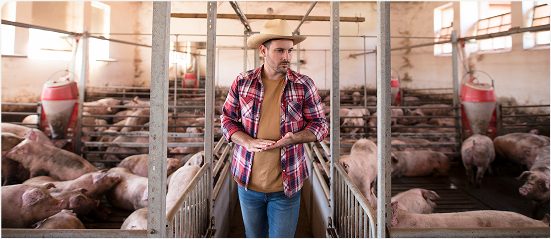
Livestock producers generate large volumes of liquid waste that has to be stored, managed and disposed of. Storage capacity caps how much a farm can produce. Compliance is ongoing. None of it is optional.

At the same time, growers are spending more each year on fertiliser inputs.

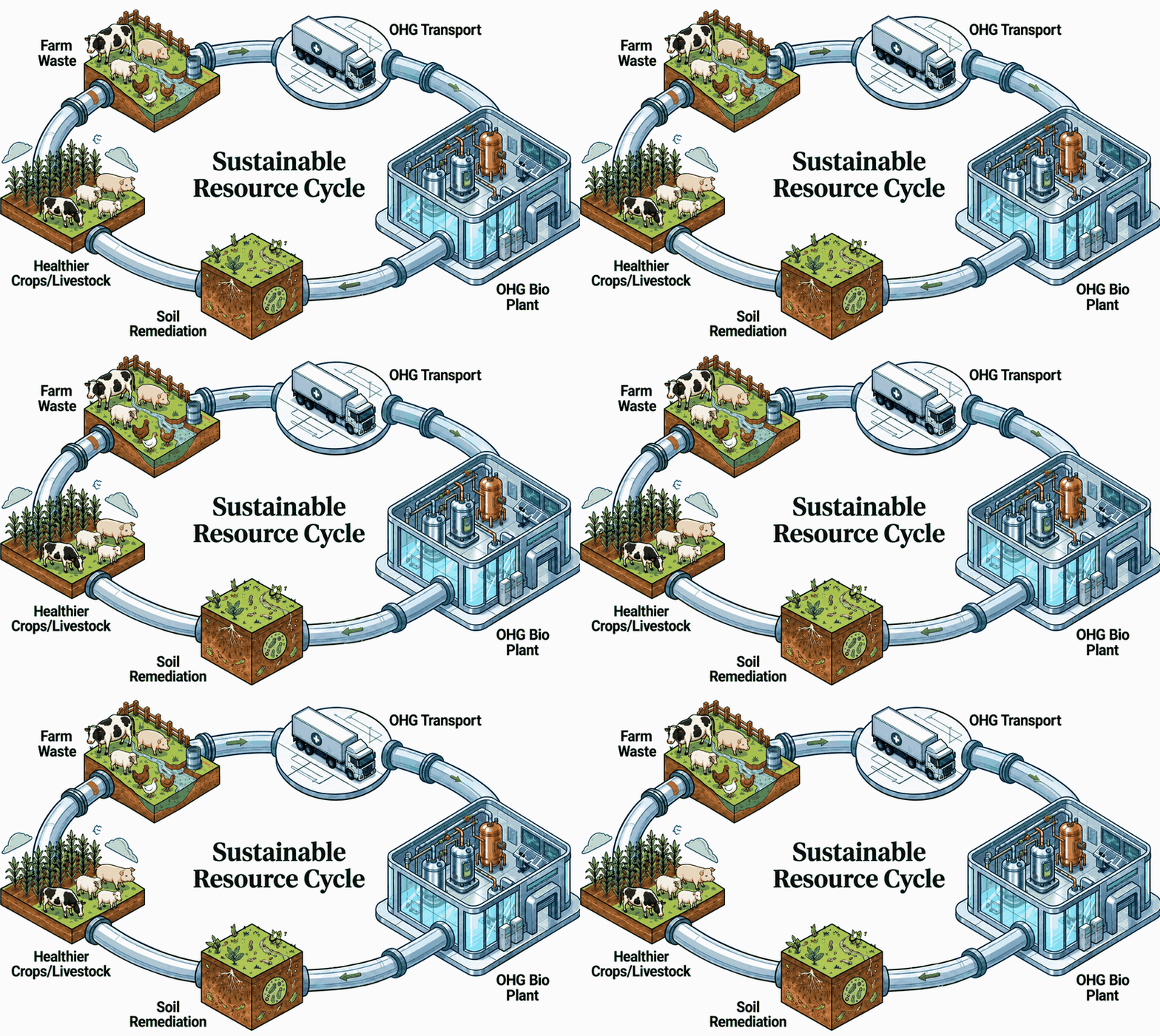
OHG Bio is developing a system to close this loop. This biological process converts liquid waste into a microbial fertiliser designed to go back onto Australian soil. Once established, OHG Bio will take liquid waste off livestock farms and process it at our own facility.

One waste stream. Two problems addressed by a single system.

One Loop, Two Ways to Work With Us

OHG Bio sits on both sides of the same cycle. Which side you are on depends on what leaves or enters your paddock.

For Livestock Farmers:
Liquid waste collection

A collection and offtake service for piggeries, dairies and other intensive livestock operations with liquid waste to manage. Once established, we’ll collect suitable waste from your site on an agreed schedule and take it to our processing facility.

For Growers:
Microbial liquid fertiliser

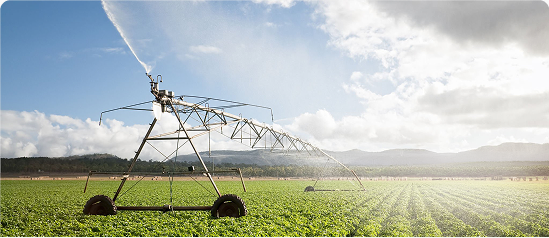
A biologically processed liquid fertiliser designed for broadacre and horticultural systems. It’s formulated to carry bioavailable nutrients, live microbial cultures, and amino acids. It’s designed to run through existing drip and spray irrigation.

The circular process

From Liquid Waste to Fertiliser in Days, Not Months

Conventional liquid waste treatment ponds work on a timescale of months. This biological process runs in as little as 6 days, with optimised cycles as fast as 24 hours, and minimal residual waste at the end of it.

The technology

Powered by Unique Microbial Blend

The conversion engine behind OHG Bio is a proprietary blend of microorganism strains. Single strain products are common. A multi-strain formulation is different, because the value is not in the organisms themselves but in the ratio between them and the fermentation conditions that activate them.

Synergistic formulation

The strains are combined in a specific ratio designed to produce a compounding biological reaction.

Two stage processing

Aerobic and anaerobic stages work together to break down organic matter.

Continuous improvement

Field performance data is designed to feed back into ongoing formulation development.

Who we are

Proven Technology, Australian Ambition

OHG Bio is an Australian biotechnology company bringing this technology to Australian agriculture. We’re a joint venture with Guangdong Guanchi Agricultural Technology Group Co., Ltd., part of the Guanchi Bio Group, combining established biological technology with local operational expertise. We specialise in agricultural waste treatment and resource recovery, converting liquid waste into microbial liquid fertiliser designed to support soil health and build a more sustainable farming system.

Frequently Asked Questions

Microbial liquid fertilisers are biological products containing active living microorganisms — such as beneficial bacteria, fungi, and actinomycetes — combined with organic matter, amino acids, and trace nutrients. These microbes are designed to colonise the soil and root systems, convert fixed or insoluble soil nutrients into bio-available forms, and support soil structure.

Liquid formulations are water-soluble and designed for integration into fertigation systems, including drip irrigation, sprinkler systems, sprayers, and drone applications. Product lines can be tailored to different crop growth stages, from early root development through to maintenance of degraded or continuous-cropping soils.

On-site farm growth is frequently capped by environmental regulations and spatial limits on how much liquid waste can be legally stored or spread on-site. Off-site waste removal is designed to ease that legal and spatial constraint. Collection will still involve a vehicle attending the farm on a scheduled basis, so standard biosecurity protocols continue to apply at the collection point.

Raw, untreated livestock effluent can contain pathogens, parasite eggs, and heavy metals that pose biosecurity and environmental risks if not properly managed. The treatment process begins with a high-temperature phase designed to break down E. coli, roundworm eggs, and other pathogens, and to help neutralise heavy metals, followed by microbial fermentation.

Raw liquid waste is first heated to break down parasite eggs and pathogens. Microbial cultures are then introduced, fermenting the material through both aerobic and anaerobic processes to break down complex organic matter into a stable, nutrient-rich liquid fertiliser. Standard processing takes 6–12 days, with the cycle able to run in as little as 24 hours under optimised conditions.

The conversion engine is powered by a proprietary formulation of microorganism strains working together, rather than a single strain. The multi-strain formulation combines nitrogen-fixing, phosphate-solubilising, potassium-releasing, and biocontrol bacteria, including strains such as Bacillus subtilis, Paenibacillus polymyxa, and Bacillus megaterium.

The process is designed to capture agricultural waste before it can reach local catchments or waterways, converting it into a stable liquid fertiliser rather than leaving it in open storage.

Investors & Value Chain Stakeholders

This closed-loop model reflects the principles of the Australian Agriculture Circular Economy (AACE) Framework, converting agricultural waste streams into valuable fertiliser inputs and supporting Australia’s fertiliser security.

A standard regional processing plant, based on the technology’s established design, covers 3,000–5,000 square metres of automated production area, with a design capacity of 20,000 to 26,000 tonnes processed annually.

Get in touch

Whether you have agricultural liquid waste to manage or
you are looking for biological inputs for your soil, we
would like to hear from you.

Follow us

Follow us on our social media for the latest updates.

Turn your effluent into something useful

Whether you have effluent to move or crops to feed, we would like to hear from you.